
Washington, Tel Aviv, and Tehran: Why One Phone Call Signals a Much Bigger Moment in the Middle East
At first glance, a phone call between the U.S. Secretary of State and Israel’s prime minister may seem routine, just another diplomatic check-in in a region where crises rarely pause. But Marco Rubio’s conversation with Benjamin Netanyahu comes at a moment when three volatile fault lines are shifting at once: mass unrest inside Iran, a stalled Gaza ceasefire, and tentative U.S.-brokered engagement between Israel and Syria. Taken together, these developments suggest the Middle East is entering a new, unpredictable phase in which Washington’s choices could either recalibrate regional power or deepen existing fractures.
This is not simply about diplomacy as usual. It is about whether the United States can manage simultaneous crises without triggering unintended consequences.
Iran’s Protests: A Strategic Earthquake, Not Just Civil Unrest
The most consequential backdrop to Rubio’s call is Iran itself. The country is witnessing its largest anti-government protests in years, fueled by economic hardship, political repression, and long-simmering public anger toward the Islamic Republic’s ruling elite. The scale of the crackdown, with dozens killed, thousands detained, and near-total internet shutdowns, signals that Tehran views the unrest as an existential threat.
For Washington, Iran’s internal turmoil represents both opportunity and President Donald Trump’s public endorsement of protesters, framing the movement as a historic push toward “freedom,” which is consistent with his confrontational stance toward Tehran. Yet history offers a cautionary lesson: overt U.S. support can sometimes backfire, allowing Iranian authorities to brand protests as foreign-backed conspiracies and justify harsher repression.
From Israel’s perspective, the protests complicate an already tense strategic equation. A weakened Iranian regime could reduce Tehran’s capacity to fund and arm proxy groups like Hezbollah and Hamas. But instability also carries the risk of reckless escalation, either by Iranian hardliners seeking to rally nationalist sentiment or by regional actors miscalculating Tehran’s red lines.
Rubio’s discussion with Netanyahu likely focused on this delicate balance: how to respond to Iran’s internal crisis without provoking a wider conflict or undermining the protesters themselves.
Gaza: A Ceasefire That Exists Mostly on Paper
While Iran captures headlines, Gaza remains a slow-burning crisis. The ceasefire brokered last October has failed to move beyond its initial phase, with Israel and Hamas accusing each other of violations. The core problem is structural: the first phase addressed immediate violence, but subsequent phases require political compromises neither side appears willing or able to make.
For Israel, deeper concessions raise domestic political risks for Netanyahu, whose coalition includes hardline factions skeptical of any deal with Hamas. For Hamas, further steps could weaken its claim to resistance and expose internal fractures. The result is a diplomatic stalemate that keeps Gaza trapped in humanitarian limbo.
Why does this matter now? Gaza is increasingly entangled with Iran’s regional strategy. Tehran has long positioned itself as a patron of Palestinian resistance, and prolonged conflict strengthens that narrative. If Iran’s leadership feels cornered at home, it may seek to reassert influence abroad, making Gaza a potential pressure point.
This is where U.S.-Israeli coordination becomes critical. Rubio’s call suggests Washington is trying to prevent Gaza from becoming the spark that ignites a broader regional escalation, especially at a time when Iran is internally vulnerable.
Syria: Quiet Diplomacy in a Noisy Region
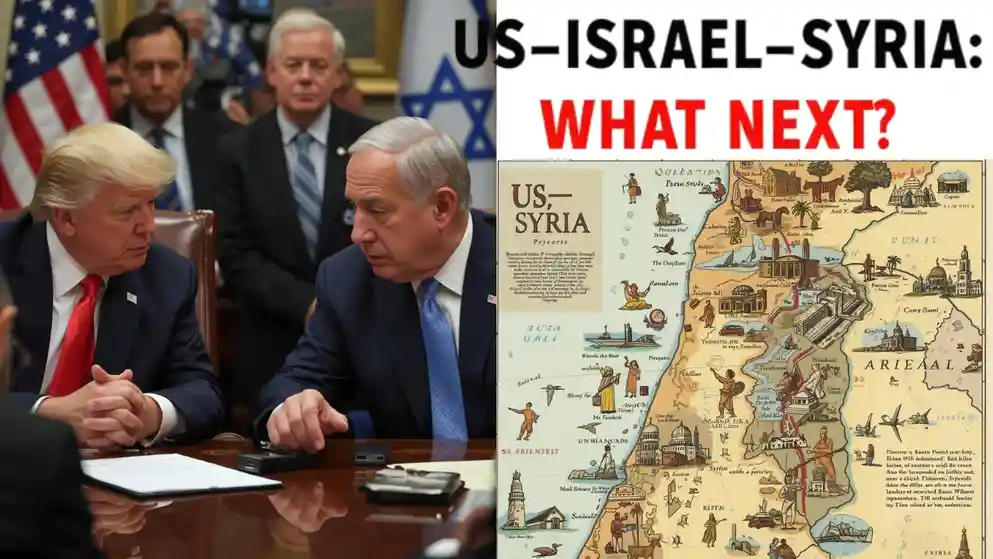
Amid the turmoil, one development has received comparatively little attention: U.S.-mediated talks between Israel and Syria to establish a communication mechanism on security and commercial issues. This may sound modest, but in Middle Eastern diplomacy, modest steps often matter most.
Syria remains fragmented, economically devastated, and heavily influenced by Iran and Russia. Any channel that reduces the risk of miscalculation along Israel’s northern border is significant. For Washington, facilitating such talks serves multiple goals: limiting Iranian influence in Syria, stabilizing a key front, and demonstrating that U.S. diplomacy can still produce tangible results.
The timing is notable. With Iran distracted by domestic unrest, there may be a narrow window to Syria reshape regional alignments if Washington and its allies act carefully.
Trump, Netanyahu, and a Personalized Foreign Policy
Another layer to this moment is the unusually close personal relationship between President Trump and Prime Minister Netanyahu. Since Trump returned to office in January 2025, Netanyahu has made five trips to Washington, while Trump has already visited Israel. This frequency is at its highest.
That closeness has advantages: rapid coordination, aligned messaging, and clear red lines. But it also carries risks. Over-personalized diplomacy can sideline institutional checks and reduce flexibility when circumstances change Syria, as they often do in the Middle East.
Rubio’s role, therefore, is not just to relay messages but to inject strategic discipline into a Syria relationship driven by political chemistry.
What Comes Next
The convergence of Iran’s protests, Gaza’s stagnation, and tentative Israel-Syria engagement suggests the region is at an inflection point. The United States faces three key choices:
- How loudly to support Iranian protesters without undermining their legitimacy.
- How firmly to push for progress in Gaza despite political resistance on both sides.
- How seriously to invest in quiet diplomacy that reduces risks rather than delivering headlines.
Rubio’s call with Netanyahu may not have produced immediate announcements, but it reflects a recognition that these issues cannot be managed in isolation. In the Middle East, crises often overlap, and missteps reverberate far beyond their Syrian origin.
Syria’s future will hinge less on slogans and more on whether Washington balances principle with pragmatism in a harsh geopolitical arena.

Lalu Mestri is a passionate content writer specializing in SEO-focused articles, news analysis, and informative blog content. He has experience creating well-researched, engaging, and reader-friendly content across a variety of topics, including current events, lifestyle, and digital trends. Lalu focuses on delivering clear, accurate, and valuable information while maintaining strong search engine optimization practices. His goal is to help readers understand complex subjects through simple, structured, and high-quality writing.