
Homan Signals Shift in Minnesota ICE Strategy Amid Backlash and Protests
White House Border Czar Tom Homan announced efforts to recalibrate Immigration and Customs Enforcement operations in Minnesota, linking potential federal drawdowns to local cooperation as protests escalate over recent deadly actions by federal agents.
Key Highlights
- Homan proposes reducing federal ICE presence in Minnesota with state and local cooperation.
- Strategy shifts toward targeted enforcement focusing on criminal and security threats.
- Two recent fatal shootings by federal agents fueled nationwide protests.
- Minneapolis and Minnesota leaders engaged in ongoing discussions with federal officials.
- Federal civil rights investigation launched into one of the deaths.
What Is Happening?

In response to intense criticism and civil unrest in Minnesota, Tom Homan, appointed by the White House to lead Immigration and Customs Enforcement (ICE) efforts, outlined a potential pivot in federal operations. Rather than broad street sweeps that brought thousands of agents into Minneapolis, Homan’s latest plan emphasizes more targeted enforcement actions and a possible reduction (“drawdown”) of federal personnel, contingent on cooperation from state and local law enforcement.
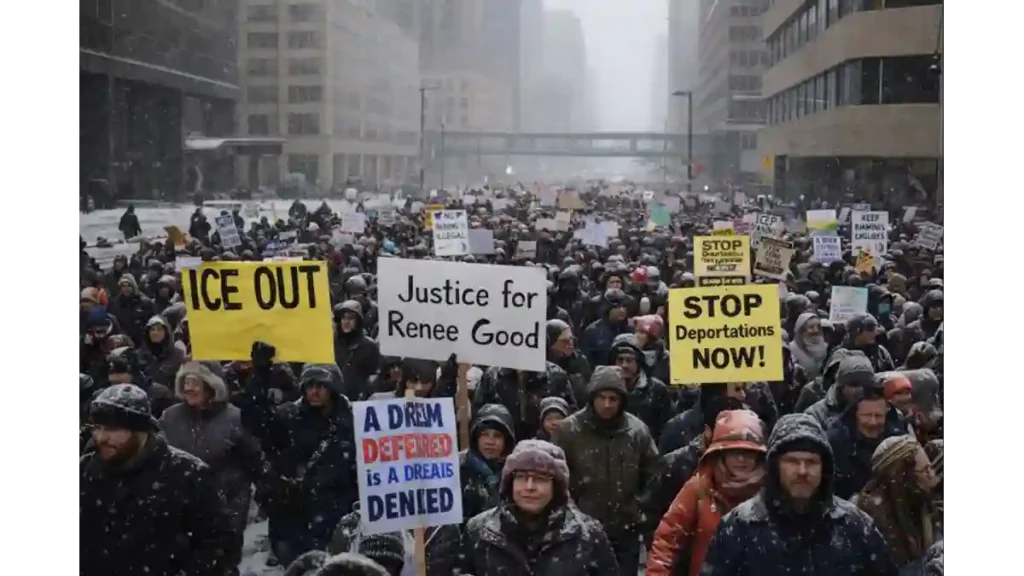
This announcement comes amid deepening tensions following the deaths of two U.S. citizens during federal immigration actions, which ignited widespread protests in Minneapolis and across the United States.
Key Constituencies & Candidates
Homan’s strategy affects multiple stakeholders: Minnesota’s political leadership, including Governor Tim Walz and Minneapolis Mayor Jacob Frey, who have demanded accountability and reassessment of federal tactics; local law enforcement officials weighing cooperation with ICE; migrant communities facing enforcement outcomes; and national constituencies watching for political reverberations ahead of elections.
Civil rights groups and activists, whose mobilization has kept pressure on federal leaders, also represent a key constituency shaping public discourse. Meanwhile, Congressional Democrats have signaled potential budgetary battles over immigration enforcement funding in response to federal tactics.
Statements from Officials
Homan framed the shift as a pragmatic recalibration: he stressed that cooperation with local jails and law enforcement would allow federal agents to operate more efficiently and potentially reduce their visible presence on the streets. “As we see cooperation happen, then the redeployment will happen,” he said, underscoring that federal enforcement will continue but in a refined manner.
While Homan called for peaceful community engagement, President Trump has publicly rejected the notion of a full pullback, leading to mixed messaging from the administration and raising questions about policy cohesion at the highest levels.
Voter Turnout & Arrangements
Public mobilization, particularly protests drawing thousands in Minnesota and nationwide, reflects a surge of civic engagement around immigration enforcement. These demonstrations have pulled in diverse groups, including students, workers, families, and prominent cultural figures, signaling that immigration policy is translating into broader civic activism.
The federal government’s approach to law enforcement logistics, coupled with local cooperation agreements, will likely influence how these constituencies engage with upcoming elections, particularly in swing and demographically diverse districts.
Background & Political Context
The controversy in Minnesota stems from Operation Metro Surge, a large-scale federal immigration enforcement effort that deployed roughly 3,000 agents and resulted in violent confrontations, including two fatal shootings of civilians by agents.
These incidents reignited long-standing debates over immigration policy, enforcement practices, and federal versus local authority. Homan’s tenure in immigration enforcement is extensive and polarizing: he previously oversaw aggressive deportation campaigns and controversial policies under earlier administrations.
The current political climate, marked by sharp polarization over immigration policies, added pressure on federal leaders to balance law enforcement objectives with civil rights and public safety concerns.
What Happens Next?
The coming weeks are likely to define whether Homan’s strategy results in a tangible reduction in federal agents on Minnesota streets or merely recalibrates enforcement tactics. Cooperation with local officials, particularly around jail access and notification of potential immigration detainers, will be pivotal.
Simultaneously, the Department of Justice has opened a federal civil rights investigation into one of the killings, which could shape legal and public perceptions of federal enforcement.
Legislative pushback in Congress, protest movements and state-level legal challenges could further complicate implementation, with wider implications for federal-state dynamics on immigration policy nationwide.
Conclusion
Tom Homan’s latest remarks signal a potential strategic shift in how federal immigration enforcement operates in Minnesota, aiming to balance targeted actions with local cooperation. Yet the broader debate over enforcement tactics, community relations, and political accountability remains unresolved, underscoring the fraught intersection of national policy, civil liberties, and public safety in one of the most contentious arenas of contemporary U.S. politics.

Lalu Mestri is a passionate content writer specializing in SEO-focused articles, news analysis, and informative blog content. He has experience creating well-researched, engaging, and reader-friendly content across a variety of topics, including current events, lifestyle, and digital trends. Lalu focuses on delivering clear, accurate, and valuable information while maintaining strong search engine optimization practices. His goal is to help readers understand complex subjects through simple, structured, and high-quality writing.