When Night Travel Turns Deadly: What the Chitradurga Bus Fire Reveals About India’s Highway Blind Spots
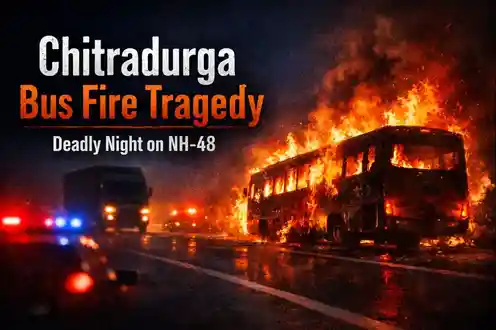
The images from Chitradurga are difficult to process, not because road accidents are rare in India, but because this one exposes how thin the line is between routine travel and catastrophe. A sleeper bus, filled with passengers chasing rest during a long overnight journey, became a furnace within moments on National Highway-48. At least ten people did not get the chance to escape.
This was not just an accident. It was the convergence of multiple systemic failures playing out at 2:30 am, when visibility is low, fatigue is high, and enforcement is thin.
Why This Tragedy Cuts Deeper Than Numbers
India records thousands of highway deaths every year, but incidents like the Chitradurga bus fire stand out for one reason: fire after collision leaves almost no margin for survival. Unlike crashes where victims may have seconds or minutes to escape, a fuel-fed blaze inside a sleeper coach turns exits into traps.
Preliminary accounts suggest the truck crossed the divider and struck the bus near its fuel tank. That detail matters. Sleeper buses, designed to maximize passenger capacity and comfort, often carry fuel tanks positioned in ways that increase vulnerability during side or frontal impacts. When these tanks rupture, the bus effectively becomes an enclosed fire chamber.
The victims were not reckless drivers or thrill-seekers. They were ordinary people, workers, pilgrims, families—who chose night travel because it is affordable and time-efficient. That is precisely why this incident resonates so strongly.
The Hidden Dangers of Nighttime Highways
Most fatal highway accidents in India occur at night or in the early morning hours. Fatigue, speeding, poor lane discipline, and inadequate divider design all compound risk. The Chitradurga crash highlights two specific dangers:
- Divider breaches by heavy vehicles
When trucks jump” dividers, it raises uncomfortable questions about divider height, design, and maintenance. A divider that cannot stop a loaded lorry at speed is little more than visual reassurance. - Fuel safety standards in private buses
Unlike aviation or railways, intercity buses—especially private operators—face uneven enforcement of safety norms. Fuel tank placement, fire-retardant interiors, emergency exits, and fire extinguishers are often treated as checklist items rather than life-saving systems.
The fact that some passengers escaped while others were trapped suggests uneven access to exits—another design flaw that deserves scrutiny.
Official Responses: Necessary, But Not Sufficient
Condolences from the Prime Minister, financial compensation, and statements from state leaders acknowledge the scale of the loss. Relief payments matter to grieving families, but they do not address the root causes that allow such tragedies to repeat.
The uncomfortable truth is that India often responds to horrific accidents with sympathy first, reform later—and sometimes not at all.
A Pattern, Not an Isolated Event
The Telangana bus-truck collision earlier this month, which killed 20 people, reinforces a grim pattern. Different states, different highways, same outcome: buses colliding with heavy trucks, passengers bearing the brunt, and structural safety questions left unresolved.
What links these tragedies is not geography but regulatory gaps:
- Overloaded or poorly controlled trucks
- Weak enforcement of rest norms for drivers
- Minimal crashworthiness standards for buses
- High-speed highways are built faster than their safety ecosystems
Until these issues are addressed collectively, each incident becomes a warning ignored
What Must Change—Now, Not Later
If Chitradurga becomes just another entry in accident statistics, the system has failed again. This moment calls for concrete action:
- Mandatory fuel tank safety audits for sleeper buses, especially for private operators
- Upgraded highway dividers capable of stopping heavy vehicles at speed
- Stricter night-driving enforcement, including fatigue checks for truck drivers
- Fire-resistant materials and accessible exits are non-negotiable standards in buses
- Transparent public reporting of safety violations by transport operators
These are not radical demands. They are overdue for corrections.
The Larger Question India Must Face
Every major highway tragedy forces the same uncomfortable question: Do we treat road deaths as unavoidable, or preventable? Countries that answered this question honestly reduced fatalities through engineering, enforcement, and accountability. India has the technical capacity to do the same—it lacks only urgency.
For the passengers who boarded that bus in Bengaluru, the journey was meant to end in Shivamogga, not in flames on NH-48. Honoring them means ensuring that the next overnight traveler reaches home alive, not remembered in condolences.

Lalu Mestri is a passionate content writer specializing in SEO-focused articles, news analysis, and informative blog content. He has experience creating well-researched, engaging, and reader-friendly content across a variety of topics, including current events, lifestyle, and digital trends. Lalu focuses on delivering clear, accurate, and valuable information while maintaining strong search engine optimization practices. His goal is to help readers understand complex subjects through simple, structured, and high-quality writing.